
Mold remediation in Smyrna often starts under the house or above the ceiling: crawl spaces in older neighborhoods, attic air handlers in newer subdivisions, and leaks in busy family bathrooms. Call (626) 515-6097, give us your Smyrna address or ZIP code, and we connect you with an independent local mold company that inspects, finds the moisture source and quotes in writing before starting.
Smyrna's homes, decade by decade
Smyrna grew around the railroad and, from World War II until the early 1970s, Sewart Air Force Base, whose former grounds are now home to Smyrna Airport. The town grew again after Nissan opened its vehicle assembly plant here in the 1980s, and it has kept growing with the rest of Rutherford County. That history left a mix of housing:
- Older homes near downtown and the old base area, many on crawl spaces.
- 1970s–1990s subdivisions with crawl spaces or slabs, aging plumbing and original ductwork.
- Large newer subdivisions with slab foundations, attic HVAC and tight construction.
- Apartments and townhomes along the main corridors.
The Sam Davis Home
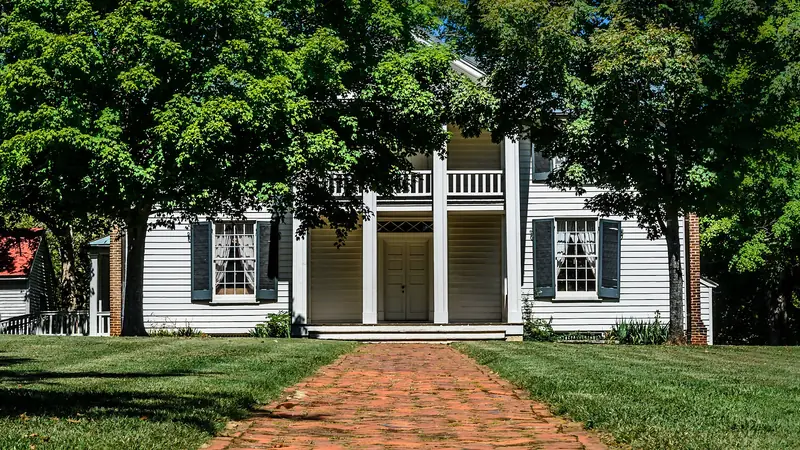
The Sam Davis Home and Plantation preserves the family home of Sam Davis, the young Confederate scout executed in 1863 and long remembered in Tennessee as a folk hero. The house sits on farmland along Stewart Creek and is now a museum. Like any historic house in the region, it is a reminder that old wood, plaster and brick last for centuries when they stay dry, and decay fast when they don't.
Percy Priest Lake and Lee Victory Park
Smyrna borders the southern arms of J. Percy Priest Lake, and Lee Victory Recreation Park is one of the town's main gathering places, with a small lake, walking paths and event space. Neighborhoods near the lake and near Stewart Creek deal with more humidity and groundwater than those on higher ground, and some low streets collect water in heavy storms.
What Smyrna mold jobs usually involve
- Crawl space remediation with a new vapor barrier and moisture control. See crawl space mold removal.
- HVAC-related mold around attic air handlers, supply vents and condensate pans. See HVAC and air duct mold.
- Bathroom mold from leaks around tubs, showers and toilets. See bathroom mold removal.
Slab homes and hidden leaks
Many newer Smyrna homes are built on concrete slabs. Slab homes avoid crawl space humidity, but leaks inside walls, from supply lines, drain pipes or window flashing, can run down and soak the bottom plate and drywall at floor level, hidden behind baseboards and carpet. Signs include baseboards that pull away from the wall, flooring that cups or stains, paint that bubbles low on the wall, and a musty smell in one room. A moisture meter and, if needed, a small inspection opening can confirm what is going on without tearing out more than necessary.
Workers, shifts and rental homes
Smyrna has a large workforce at Nissan and other employers along I-24, and many households rent. Renters should report leaks and mold to the landlord in writing and keep dated photos. Landlords should fix the moisture source and document the remediation; a clean, written record protects everyone if questions come up later.
Clay soil, grading and storms
Rutherford County's clay soils drain slowly and sit on limestone. After heavy rain, water can collect around foundations, especially where grading settled after construction. Keeping downspouts extended and soil sloped away from the house is the cheapest mold prevention a Smyrna homeowner can do.
Attic air handlers in Smyrna subdivisions
A large share of Smyrna's newer homes put the furnace or air handler in the attic. In summer, that equipment pulls gallons of water out of indoor air every day and sends it down a condensate line. When the line clogs with algae or the overflow pan rusts through, water drips onto ceiling drywall and insulation, often unnoticed until a brown stain or musty smell appears in a bedroom below. A float switch that shuts the system off when the pan fills is an inexpensive safeguard worth asking an HVAC technician about.
Prevention tips for Smyrna homes
- Flush the HVAC condensate line every spring and check the drain pan.
- Replace HVAC filters on schedule during cooling season.
- Make sure bath fans vent outside, not into the attic.
- Look under sinks and behind the washer every few months.
- Keep indoor humidity between 30 and 50 percent.
Permits and local resources
Repair permits inside town limits go through the Town of Smyrna; unincorporated areas go through Rutherford County. Ask the company for proof of insurance, and for jobs of $25,000 or more, a Tennessee contractor license you can verify online.
What to tell us when you call from Smyrna
Tell us whether you own or rent, the home's approximate age, whether it is slab, crawl space or basement, and where you see or smell mold. If it started after a storm or a leak, tell us when.
Neighboring areas
Smyrna sits between Antioch to the northwest and Murfreesboro to the southeast. See all service areas for the full list.
Frequently asked questions
What causes most mold problems in Smyrna homes?
Most calls trace back to crawl space humidity in older homes, plumbing and bathroom leaks, HVAC condensate problems in attic air handlers, and slow-draining clay soil around foundations. Homes near Percy Priest Lake and Stewart Creek can also see higher humidity and groundwater.
Is Smyrna a town or a city, and who issues permits?
Smyrna is officially the Town of Smyrna, and the town handles building permits within its limits. Unincorporated areas around it fall under Rutherford County. Mold removal itself usually does not need a permit, but follow-up repairs to structure, plumbing, electrical or HVAC systems often do.
Should I test for mold before hiring someone in Smyrna?
Usually not. The Tennessee Department of Health and the EPA say that if you can see or smell mold, testing is generally unnecessary because the response is the same - fix the moisture and remove the growth. Testing can help in specific cases, like a hidden source, a real estate deal, or a landlord dispute.