
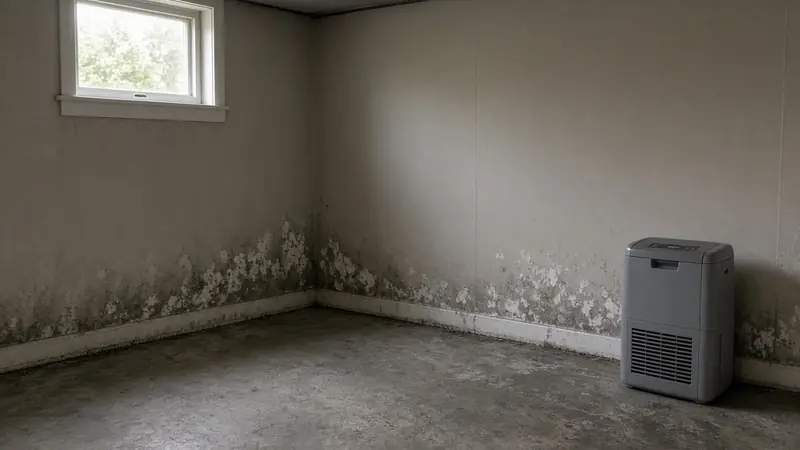
Basement mold removal in Nashville means finding where the water gets in, removing moldy drywall, carpet and insulation, cleaning the framing and concrete, and drying the space before rebuilding. Call (626) 515-6097 and we connect you with an independent local mold company that inspects the basement and quotes the removal and the moisture fix.
Why do Nashville basements grow mold?
Nashville is a city of hills. Homes in Green Hills, Crieve Hall, Bellevue and the slopes around Radnor Lake and the Warner Parks are often built into the grade, with a full or partial basement on the low side. After a heavy rain, groundwater presses against the uphill foundation wall, and hydrostatic pressure pushes moisture through cracks, cold joints and porous block. In summer, humid air in a cool basement condenses on walls and floors.
Finishing a basement covers those walls with drywall and carpet, which hides the moisture and feeds the mold. The Tennessee Department of Health's Healthy Homes page recommends maintaining gutters, sloping ground away from the foundation, sealing basements, and considering sump pumps or French drains where water collects. It also advises against carpeting basements.
Signs of basement mold
- A musty smell that is worse after rain or during humid weather.
- Peeling paint, white chalky deposits (efflorescence) or dark streaks on block or concrete.
- Baseboards that are swollen, stained or soft.
- Damp or discolored carpet edges along exterior walls.
- Condensation on cold water pipes or ducts.
- A dehumidifier that fills up every day.
How basement mold is removed
- Find the water. Moisture readings along the walls and floor, a look outside at gutters, downspouts and grading, and a check of plumbing, the water heater and the HVAC condensate line.
- Contain the work area. Basements often share air with the rest of the house through the stairwell and ductwork, so containment and covering HVAC returns matter.
- Remove moldy materials. Drywall cut well past visible growth, wet insulation and carpet pad bagged and removed.
- Clean structure. Studs, bottom plates and concrete HEPA-vacuumed and cleaned.
- Dry. Dehumidifiers until moisture readings return to normal.
- Fix the moisture. Drainage, waterproofing, humidity control, or plumbing repair, often by another trade.
- Rebuild smart. Moisture-tolerant materials, a gap at the bottom of drywall, and flooring that can handle occasional dampness.
Flooded basements and the 2010 flood
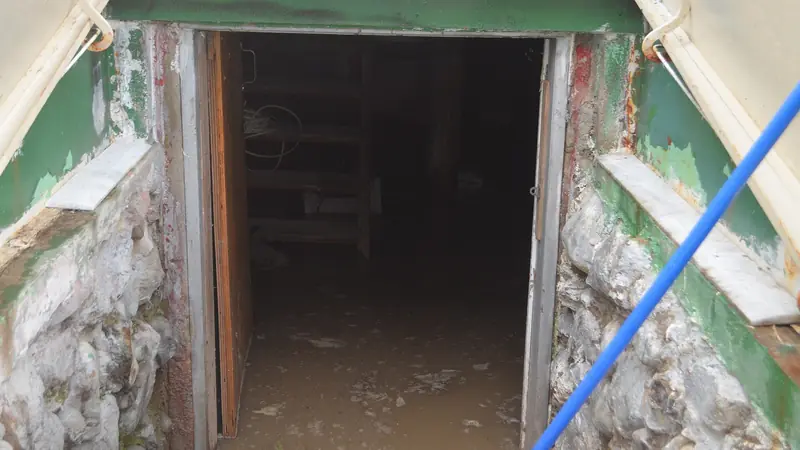
Basements took the worst of the May 2010 flood, when two days of record rain sent Mill Creek, Richland Creek and the Harpeth River out of their banks. Water that sits for more than a day or two in a finished basement almost always means mold behind the walls. If your basement floods, the EPA's flood cleanup guidance covers what to remove and how to protect yourself. Floodwater counts as contaminated, so porous materials it touched should go.
Humidity control that actually works
- Run a dehumidifier sized for the space and drain it to a floor drain or pump so it runs continuously.
- Keep relative humidity below about 50 percent; Metro Public Health notes mold can grow above about 60.
- Do not run the basement dehumidifier with windows open in summer.
- Insulate cold water pipes and seal duct joints.
- Make sure the dryer vents outdoors.
Questions to ask before you sign
- Where exactly is the water coming from, and how did you confirm it?
- How far past the visible growth will you remove drywall, and will you check behind the paneling or built-ins?
- Will you cover the HVAC returns and seal the stairwell during removal?
- Which repairs are in your scope, and which need a waterproofing contractor, plumber or grader?
- What moisture readings will you hit before you close the walls?
- Do you offer, or recommend, clearance testing by an independent assessor?
- What is your Tennessee contractor license number? Tennessee lists Mold Remediation as specialty classification S-F, and a license is required on projects of $25,000 or more.
Get the answers in the written scope. Comparing two or three scopes side by side is the easiest way to see which one actually fixes the basement.
Basement calls by area
Hillside basements in Brentwood and Bellevue, lake-area homes in Hendersonville and older split-levels in Hermitage make up a lot of our basement calls. If the water came from a burst pipe or appliance, see water damage and mold. For a smell you cannot trace, see musty odor removal. And if you are deciding whether to tackle a small spot yourself, read DIY mold cleanup vs. hiring a pro.
Frequently asked questions
Why does my finished basement smell musty?
A musty basement smell usually means mold growing on the back of drywall, under carpet pad, or on the bottom plate of framed walls, fed by moisture coming through the foundation or from high humidity. The smell can be stronger after rain or in summer. An inspection with moisture meters can find the wet areas without tearing out walls first.
Do I need waterproofing as well as mold removal?
If water is coming through the foundation, yes, or the mold will return. Waterproofing can mean exterior fixes such as gutters, downspouts and grading, interior drains with a sump pump, crack repair, or exterior membrane work. Sometimes high humidity alone is the problem, and a dehumidifier set to keep the space below about 50 percent is enough.
Can basement carpet be saved after mold?
Carpet and pad that have mold growth are generally removed, because they are porous and hard to clean. Carpet that got wet from clean water and was dried within 24 to 48 hours may be saved. Many Nashville homeowners replace basement carpet with tile, sealed concrete or vinyl plank to avoid a repeat.
What should be done with moldy basement drywall?
Moldy drywall is cut out well beyond the visible growth, typically at least a couple of feet, bagged inside containment, and removed. The framing behind it is cleaned and dried. When rebuilding, many contractors leave a gap above the floor and use moisture-resistant materials.