
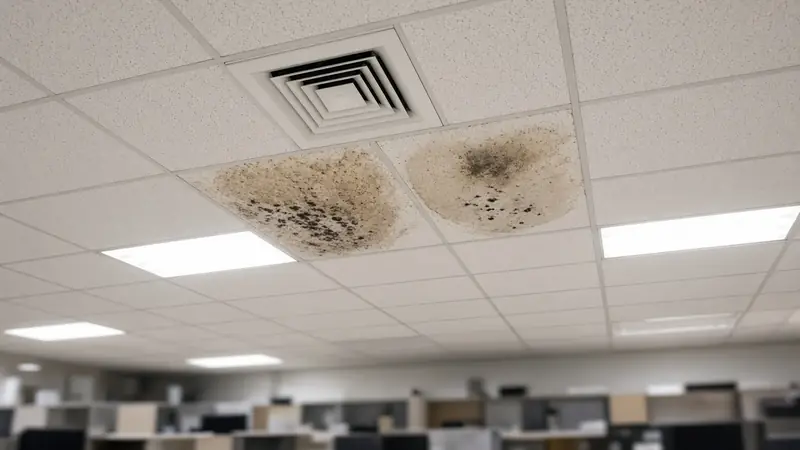
Commercial mold remediation in Nashville uses the same core steps as a home job, which are fix the moisture, contain, remove, clean and dry, but adds occupant planning, HVAC isolation, scheduling around business hours, and documentation for owners, tenants and insurers. Call (626) 515-6097 and we connect you with an independent local company that handles commercial mold work.
Types of commercial properties we get calls about
- Offices and medical suites with stained ceiling tiles under roof drains or HVAC units.
- Apartment and condo buildings, where one leaking unit affects the ones below.
- Short-term rentals and investment homes between guests or tenants.
- Restaurants and bars, where kitchens, walk-in coolers and ice machines create constant moisture.
- Churches, schools and day cares with older roofs, basements and crawl spaces.
- Retail and warehouse spaces with roof leaks and slab moisture.
The EPA commercial guide
The EPA's Mold Remediation in Schools and Commercial Buildings is the standard public reference for this work. It covers investigating moisture, planning remediation, choosing containment and protective equipment by the size of the affected area, communicating with building occupants, and confirming the work is done. Ask any company you consider how its plan lines up with it. For worker protection questions, OSHA's mold page is the federal reference.
How a commercial remediation is planned
- Investigation. Moisture source, affected materials and square footage, HVAC layout, and occupants in and near the area.
- Scope and schedule. Work phases, after-hours or weekend work, which areas close, and how long.
- Occupant communication. Notice to tenants or staff, signage, and a contact person.
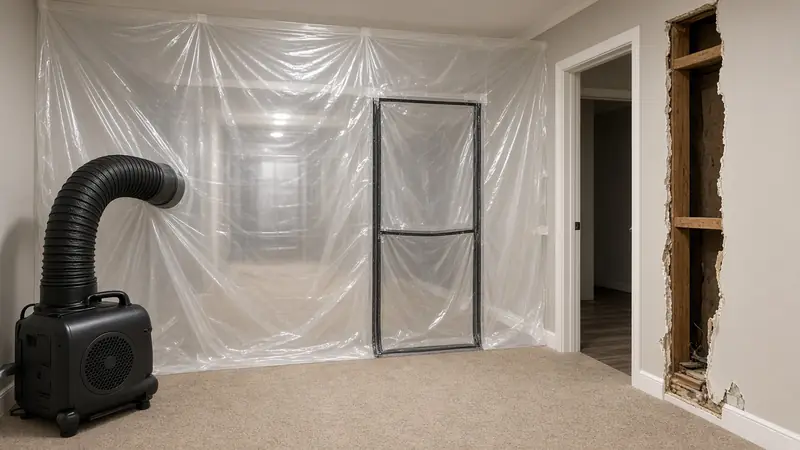
- Containment and HVAC isolation. Critical barriers, negative air, sealed supply and return grilles, and sometimes shutting down an air handler zone.
- Removal and cleaning. Ceiling tiles, drywall, insulation and carpet removed; structure and contents cleaned.
- Moisture repair. Roofing, plumbing, envelope or HVAC fixes, often by other trades.
- Verification. Visual inspection, moisture readings, and clearance testing by an independent assessor when appropriate.
- Closeout report.
Why Nashville commercial buildings get mold
Flat and low-slope roofs, rooftop HVAC units and long humid summers are a combination that produces a lot of ceiling-tile calls. Downtown and Midtown buildings near Lower Broadway and the Gulch range from century-old brick to brand-new towers, and older masonry can wick water for days after heavy rain. Many commercial properties along the Cumberland River and its creeks also took water in the May 2010 flood; the Opryland area is the best-known example. Landlords who bought those buildings later sometimes find old damage during renovations.
Rental and multifamily properties
In Davidson County, all buildings must be kept in a clean, safe and sanitary condition, and tenants can report problems to the Metro Codes Property Standards Division through hubNashville or the Codes hotline. Inspectors typically visit within one to five business days and can issue an abatement notice to the owner. For property managers, responding quickly with a documented inspection and remediation plan is the best way to protect tenants and the asset.
Tips for managers:
- Act on tenant reports quickly and in writing.
- Find and fix the moisture, not just the visible mold.
- Keep the scope, photos and clearance report in the unit file.
- Check adjacent units for spread, especially below plumbing walls.
Licensing, insurance and contracts
Check the contractor's Tennessee license and its classification and monetary limit, request certificates of general liability and pollution or mold coverage if your contract requires it, and spell out in the contract who fixes the moisture source, who rebuilds, and who pays for clearance testing.
What drives commercial cost and timing
Square footage, ceiling height, how many floors and HVAC zones are involved, after-hours requirements, occupied versus vacant space, and the moisture repair all affect the price and schedule. Ask for the scope to break those out, and to name who does each repair. We do not quote prices, and the company you are connected with sets its own.
Commercial calls by area
We hear from offices in Brentwood and Franklin, multifamily properties in Antioch and Murfreesboro, and churches and small businesses across Hermitage. Most commercial jobs start with an inspection and lead to mold remediation of a defined area; HVAC components often need HVAC mold work as well. For hiring tips, see How to choose a mold remediation company in Tennessee.
Frequently asked questions
Do commercial mold jobs in Tennessee need a licensed contractor?
Tennessee requires a state contractor license before bidding or contracting on projects of $25,000 or more, and the Board for Licensing Contractors lists Mold Remediation as specialty classification S-F. Many commercial remediation projects reach that threshold. Ask for the license number and classification, verify it on the state's search site, and ask for certificates of insurance.
Can we keep the building open during mold remediation?
Often, yes, with proper containment, negative air pressure, isolated HVAC zones and after-hours scheduling. The company should give you a plan for occupant notice, entry routes for workers and waste, and any spaces that must close. Areas used by children, patients or people with respiratory conditions need extra care.
What documentation should a commercial mold job produce?
A written scope, photos before and after, containment and air filtration details, moisture readings, waste handling, the moisture repair performed, and a clearance report if testing was done. Property managers and insurers often ask for all of it, and it helps if the issue comes up again with a tenant or buyer.
Who is responsible for mold in a Nashville rental building?
Responsibilities depend on the lease and Tennessee landlord-tenant law, which covers Davidson County. Metro Codes requires buildings to be kept clean, safe and sanitary, and tenants can report violations through hubNashville. Property owners usually handle building moisture and repairs. Get legal advice for specific disputes.