
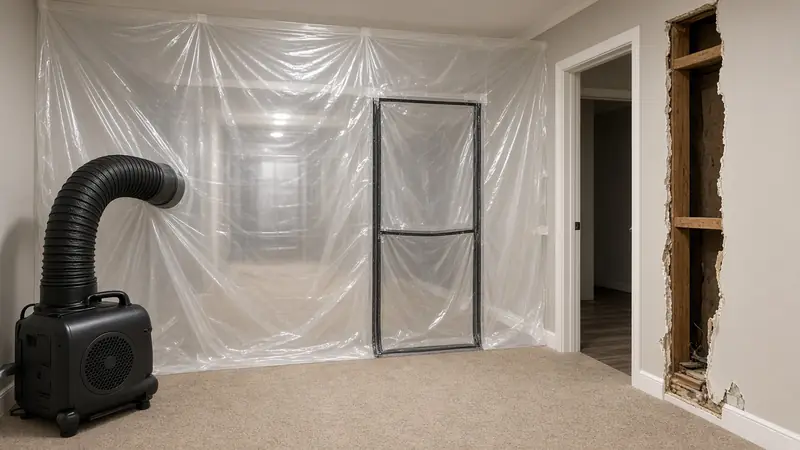
Mold remediation in Nashville means four things done in order: find and stop the moisture, isolate the moldy area, remove or clean the contaminated materials, and dry the structure so mold cannot come back. Call (626) 515-6097 and we connect you with an independent local remediation company that will inspect first and give you a written scope and quote before work begins.
What does mold remediation include?
The EPA's guide Mold Remediation in Schools and Commercial Buildings and the industry's standard practice follow the same pattern for homes:
- Assessment. The technician maps visible growth, checks moisture with meters and often a thermal camera, and identifies the source, whether that is a roof leak, a plumbing drip, condensation or groundwater.
- Containment. Plastic sheeting seals the work zone from the rest of the house. For larger areas, a HEPA air scrubber exhausts air out of the zone so it stays under slight negative pressure, which keeps spores from drifting into clean rooms.
- Removal. Porous materials with growth, such as drywall, insulation, carpet pad and ceiling tile, are cut out, bagged and removed. The Tennessee Department of Health says moldy porous materials should be replaced, not painted over.
- Cleaning. Framing, subfloor and other hard surfaces are HEPA-vacuumed and cleaned. Wood may be sanded or wire-brushed where growth has stained it.
- Drying. Dehumidifiers and air movers bring materials back to normal moisture before anything is closed up.
- Verification. A visual check, moisture readings and, when needed, post-remediation clearance testing by an independent assessor.
Why Nashville homes need more than a quick cleanup
Humidity is the constant here. Summers along the Cumberland River are long and sticky, and Metro Public Health notes mold can grow once relative humidity stays above about 60 percent. A finished basement in the hills near Radnor Lake or a crawl space in the older blocks around Centennial Park can stay damp for most of the season.
Floods leave a long tail too. The May 2010 flood pushed record water into neighborhoods along Mill Creek, Richland Creek and the Harpeth River, and homes that were dried quickly but not fully can still show growth in wall cavities and under floors. A remediation company that understands that history will check behind baseboards and under flooring, not just the visible spots.
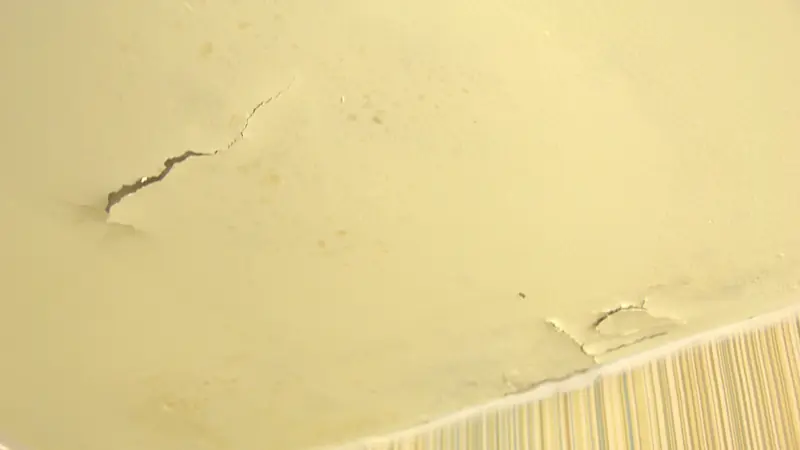
Remediation vs. removal vs. cleaning
People use these words loosely, so here is how the trade uses them:
- Mold cleaning is wiping a small area of surface mold off a hard, non-porous surface. A homeowner can often do this for patches under about 10 square feet, following the EPA's Mold Cleanup in Your Home.
- Mold removal usually means physically taking out moldy materials. It is the core of every remediation.
- Mold remediation is the whole process: containment, removal, cleaning, drying and fixing the cause.
If the area is larger than a few square feet, inside a wall, in the HVAC system, or followed flood or sewage water, ask for remediation, not just cleaning. Our page on mold inspection and testing covers the step before this one, and water damage and mold covers drying after a fresh leak.
What drives the cost
We do not publish prices, because a fair number depends on the job. These factors move the quote the most:
- Size of the affected area and how many rooms or levels it reaches.
- Access. A tight crawl space or a low attic takes longer than an open basement wall.
- Materials. Drywall and insulation are removed; framing is cleaned; hardwood and cabinets may be salvageable or not.
- Containment level. A small closet needs less setup than a whole floor.
- The moisture fix. Roof, plumbing, grading or HVAC repairs are often a separate trade.
- Rebuild. Some remediation companies put drywall and trim back; others hand off to a contractor.
- Clearance testing, if you want it or a buyer, landlord or insurer needs it.
Ask for a written scope that lists each of these. If two quotes are far apart, compare what each one actually includes.
Licensing and what to ask
Tennessee's Board for Licensing Contractors includes Mold Remediation (S-F) as a specialty classification, and a state contractor license is required before bidding or contracting on projects of $25,000 or more. For any job, ask for the license number and proof of insurance, and look the license up on the state's license search.
Other good questions:
- What caused this, and who will fix the moisture?
- How will you contain the area and protect the HVAC system?
- What will you remove, and what will you clean?
- How will you confirm the area is dry and clean before you close it up?
Where we see remediation calls
Calls for full remediation come from every part of the metro. Older crawl-space homes in East Nashville and flood-affected streets in Bellevue are common, and so are finished basements in Brentwood and newer homes in Murfreesboro with plumbing leaks inside walls. If the mold is in a specific spot, our pages on crawl space mold and attic mold go deeper.
Not sure whether you need a professional at all? Read DIY mold cleanup vs. hiring a pro.
Frequently asked questions
How long does mold remediation take in a Nashville house?
A small, contained area such as one bathroom wall is often finished in a day or two. A crawl space, an attic or several rooms can take several days, plus drying time before walls are closed. The company should give you a timeline in the written scope, including any days needed for repairs by a plumber or roofer.
Do I have to leave my home during remediation?
Not always. With proper containment and negative air, many families stay home while work happens in a closed-off area. People with asthma, allergies, lung conditions or weakened immune systems, and infants, may be better off elsewhere during removal. Ask the company what it recommends for your situation.
Is spraying a mold killer the same as remediation?
No. The EPA's goal is to remove mold, not just kill it, because dead mold can still cause allergic reactions. Spraying without removing moldy porous material and fixing moisture usually means the problem returns. Antimicrobial products can be one step after cleaning, not the whole job.
What should be in a written remediation scope?
The affected areas and square footage, the moisture source and who will fix it, the containment and air filtration plan, which materials will be removed versus cleaned, how waste leaves the house, drying targets, whether clearance testing is included or recommended, and the price. Get it in writing before work starts.