

Mold remediation in Spring Hill usually involves newer homes: attics with bath fans that were never vented outside, slab homes with hidden plumbing leaks, and HVAC systems that drip where no one looks. Call (626) 515-6097, share your Spring Hill address or ZIP code, and we connect you with an independent local mold company that inspects, finds the moisture source and quotes in writing before starting.
A city of new subdivisions
Spring Hill straddles the line between Maury County and Williamson County, south of Franklin along U.S. 31 and I-65. It was a small town until the Saturn automobile plant opened in 1990; the plant is now General Motors' Spring Hill Manufacturing complex. Since then, Spring Hill has become one of the fastest-growing cities in Tennessee, with large subdivisions across former farmland on both sides of the county line.
Most Spring Hill homes are less than 30 years old. That changes where mold shows up:
- Attics with bath fans, dryer vents or kitchen hoods that vent into the attic instead of outside.
- Attic HVAC systems with clogged condensate lines and rusted pans.
- Slab foundations where leaks run under baseboards and flooring.
- Bonus rooms over garages where air leaks bring in humid air.
- Windows and doors where flashing lets wind-driven rain inside the wall.
Rippavilla and Spring Hill history
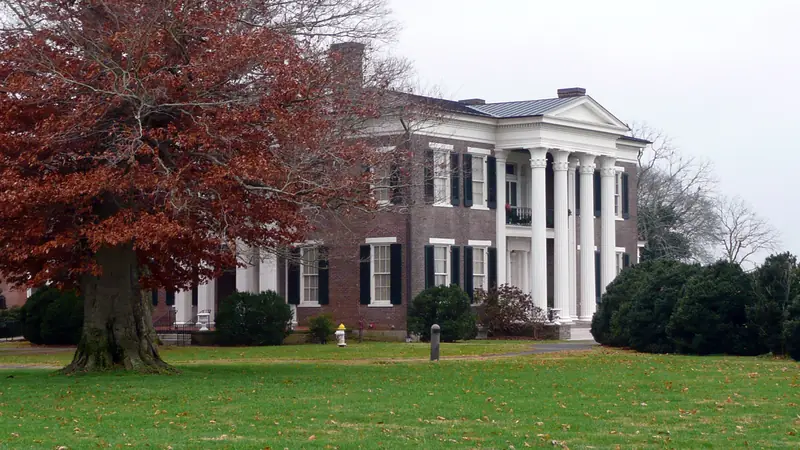
Rippavilla, the 1850s mansion now managed by the Battle of Franklin Trust, stands on the north side of town. It is tied to the November 1864 events at Spring Hill that came just before the Battle of Franklin. Historic homes like Rippavilla and the older farmhouses around Spring Hill face the classic Middle Tennessee issues: crawl spaces, old plaster, and the constant work of keeping water out.
Parks and greenways
Spring Hill's parks system includes Harvey Park, Fischer Park and other neighborhood parks, connected in places by greenways. Neighborhoods built near creeks and drainage areas can see more groundwater and runoff after heavy rain, and detention ponds in subdivisions are a reminder of how much water these lots have to shed.
What Spring Hill mold jobs usually involve
- Attic mold from bath fan venting and ventilation problems. See attic mold removal.
- HVAC-related mold around air handlers and supply vents. See HVAC and air duct mold.
- Leak-driven mold behind walls and under floors after plumbing or appliance failures. See water damage mold.
Tight homes and indoor humidity
Spring Hill homes are built to modern energy codes, which keep conditioned air in and outdoor air out. That is good for energy bills but means moisture from daily life stays inside unless it is exhausted. Run bath fans during showers and for 20 minutes after, use the range hood when cooking, and make sure the dryer vents outdoors. If indoor humidity stays above 60 percent in summer, the HVAC system may be oversized or short-cycling, and a dehumidifier or HVAC adjustment can help.
Builder warranties and documentation
Many Spring Hill homeowners still have a builder warranty when they first notice mold. Before anyone opens walls, document what you see with dated photos, note when the problem started, and report it to the builder in writing. A mold company can provide a written inspection report describing the moisture source, which can help in a warranty discussion. See mold inspection and testing.
Clay soil and settling grading
New lots in Spring Hill are graded to slope away from the house, but the fill around foundations often settles in the first few years, reversing the slope. Water then collects against the slab or crawl space wall. Walk around the house after a heavy rain: if water pools near the foundation, add soil to restore the slope and extend downspouts.
Prevention tips for Spring Hill homes
- Check that bath fans and the dryer vent all exit outdoors.
- Flush HVAC condensate lines each spring and consider a float shutoff switch.
- Keep indoor humidity between 30 and 50 percent.
- Check under sinks and behind the refrigerator and washer twice a year.
- Restore grading around the foundation as it settles.
- Look in the attic once a year for dark staining near bath fan housings and along the roof deck.
Permits and local resources
Repair permits inside city limits go through the City of Spring Hill. Ask the remediation company for proof of insurance, and for projects of $25,000 or more, its Tennessee contractor license number, which you can verify online.
What to tell us when you call from Spring Hill
Tell us the home's age, whether it is slab, crawl space or basement, whether it is still under builder warranty, and where you see or smell mold.
Neighboring areas
Spring Hill sits south of Franklin, with Brentwood and Nashville farther north. See all service areas for the full list.
Frequently asked questions
Why would a newer Spring Hill home have mold?
New homes are tight, so moisture from showers, cooking and laundry stays inside unless fans and HVAC remove it. Common causes include bath fans venting into the attic, clogged condensate lines on attic HVAC systems, window and door flashing leaks, plumbing leaks, and lumber enclosed while still wet. None of these require an old house.
My Spring Hill home is still under builder warranty. What should I do first?
Take dated photos, note when you first saw or smelled the problem, and report it to the builder in writing before hiring anyone or opening walls. Read the warranty for moisture and mold terms. If the builder disputes the cause, an independent inspection with a written report can help.
Which county permits apply in Spring Hill?
Spring Hill sits in both Maury and Williamson counties. Inside city limits the City of Spring Hill handles building permits. Mold removal itself usually does not need one, but structural, plumbing, electrical and HVAC repairs often do.