
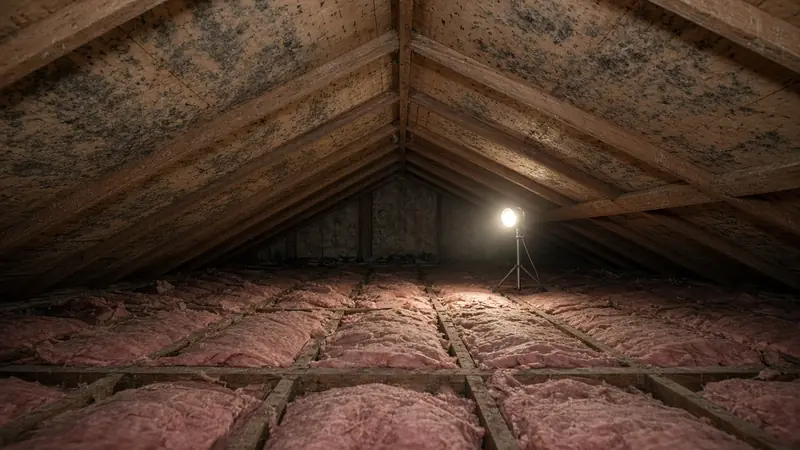
Attic mold removal in Nashville usually means cleaning stained roof sheathing and, just as important, fixing the ventilation or moisture problem that caused it. Call (626) 515-6097 and we connect you with an independent local mold company that checks the attic's airflow, bath fan venting and roof deck before quoting the cleanup.
Why do attics in Nashville grow mold?
An attic is supposed to stay close to outdoor conditions: air comes in at the soffits and leaves at the ridge or gable vents. Mold shows up when moisture gets in faster than it can leave. In Middle Tennessee, the usual culprits are:
- Bathroom and kitchen fans that vent into the attic. This is the most common cause we hear about. A daily shower puts a lot of water vapor into the attic, and it condenses on the underside of the roof deck. The fix is ducting the fan to an exterior roof or wall cap.
- Blocked soffits. Insulation blown into the eaves can block the intake vents, so air stagnates.
- Air leaks from the house. Recessed lights, attic hatches, top plates and plumbing chases let warm, moist indoor air rise into the attic.
- Roof leaks. Flashing at chimneys and walls, pipe boots and valleys can leak slowly, especially after hail or wind storms.
- Winter condensation. On a cold, clear night, roof sheathing can fall below the dew point of attic air, and frost or moisture forms on the north-facing deck.
Nashville's long humid summers make the first three worse, and the region's freeze-thaw winters add the last one.
How attic mold is removed
- Inspection and moisture check. The company checks sheathing moisture, looks for leaks, and confirms whether fans and dryer vents end outdoors.
- Protecting the house. The attic hatch is sealed and the living space below is protected so dust does not fall into bedrooms.
- Cleaning the sheathing. Methods vary: HEPA vacuuming and wire brushing, sanding, dry-ice or soda blasting, or careful wet cleaning followed by drying. Ask which method the company uses and why.
- Insulation. Wet or moldy insulation is removed and replaced. Dry insulation near the work may be left in place or replaced, depending on contamination.
- Fixing the cause. Fan ducts rerouted outdoors, soffit baffles installed, air leaks sealed, ridge vent added or repaired. Some remediation companies do this; others coordinate with a roofer or insulation contractor.
Some companies apply a clear or white sealant to the cleaned wood. A sealant can help, but it is not a substitute for removing growth and fixing airflow.
Signs you have attic mold
- Dark gray, black or white fuzzy spotting on the underside of the roof deck, often worse on the north side.
- Nail tips poking through the deck that are rusted or dripping in winter.
- Damp or matted insulation.
- A musty smell in upstairs bedrooms or closets near the attic hatch.
- Ceiling stains on the top floor.
Not every dark patch is mold. Sheathing can darken from age, sun exposure through gable vents, or old water stains that dried years ago. A moisture reading and a close look, sometimes with a tape-lift sample, tell the difference. If the wood is dry and the staining has not changed in years, the priority may simply be confirming the ventilation works.
Attic mold and the roof
Ventilation requirements for attics come from building codes, and roof replacements in Davidson County generally need a permit from Metro Codes. If a roofer is replacing your roof anyway, that is the best time to fix ventilation and replace any rotted sheathing. Ask the roofer to coordinate with the mold company so the deck is cleaned before new underlayment goes on.
Nashville homes where we see attic mold
Two-story homes in Franklin and Spring Hill with bath fans that were never ducted outdoors are common calls, as are older homes in East Nashville where insulation was added over the years and the soffits got buried. Around the Warner Parks and the wooded hills toward Radnor Lake, heavy tree cover keeps roofs shaded and slow to dry after rain, which adds to the moisture load.
If the attic is fine but the floor below smells musty, the problem may be further down; see crawl space mold removal. If ductwork runs through the attic and is sweating, read about HVAC and air duct mold. Our guide What causes attic mold in Nashville homes covers the causes in more depth.
Frequently asked questions
What causes mold in a Nashville attic?
The most common causes are warm, humid house air leaking into the attic, bathroom or kitchen fans that vent into the attic instead of outdoors, blocked soffit vents, a missing or undersized ridge vent, and roof leaks around flashing and pipe boots. Winter condensation on cold sheathing and long humid summers both play a part in Middle Tennessee.
Do I need to replace my roof because of attic mold?
Usually not. Most attic mold is surface growth on plywood or OSB that can be cleaned. Sheathing that is soft, delaminated or rotted from a long leak may need to be replaced, and that is roofing work. The inspection should check the wood's strength and moisture, not just its color.
Can attic mold affect the air in my house?
It can. Attics are connected to living spaces through gaps around light fixtures, attic hatches, plumbing and wiring holes, and sometimes ductwork running through the attic. Sealing those air leaks is part of a good fix, both to keep humid air out of the attic and to keep attic air out of the house.
Will a home inspector flag attic mold during a sale?
Often, yes. Dark staining on roof sheathing is easy to see with a flashlight, and buyers' inspectors in Middle Tennessee commonly note it. Cleaning it and fixing the ventilation before listing, with documentation of what was done, can make the conversation with buyers easier.