
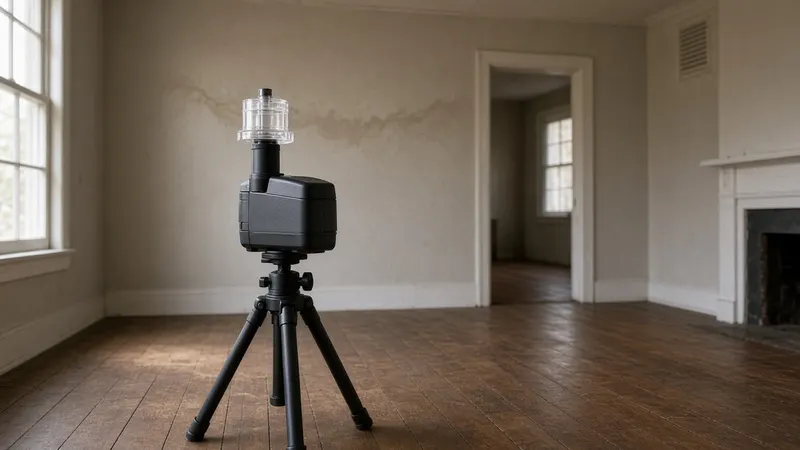
If you can see mold or smell it, you probably do not need a lab test. That surprises many Nashville homeowners, but it is the position of the Tennessee Department of Health, the CDC and the EPA. Testing has its uses, though, and knowing the difference can save you money.
What the public health agencies say
The Tennessee Department of Health's Healthy Homes program says testing for mold is generally not recommended. The reasoning is simple: all indoor mold growth should be removed and the moisture fixed, no matter what species it is. A lab report naming the species does not change the plan.
The EPA's guidance on mold testing or sampling adds that there are no federal limits for mold in indoor air. Results depend on the time of day, the weather, how recently someone vacuumed and where the sampler sat. Without context, a number on a lab report can mislead you.
When testing does make sense
Sampling earns its cost in specific situations:
- A hidden source. You smell mustiness but cannot find growth. An inspector may use moisture readings, thermal imaging and, if needed, air or wall-cavity samples to narrow down where to look.
- Clearance after remediation. After a large job, sampling plus a visual check can help confirm the work area is clean before walls are closed.
- Real estate. Buyers and sellers sometimes want documentation, especially if past water damage is disclosed.
- Landlord-tenant or insurance disputes. A written report from an independent inspector can help document conditions.
- Health concerns. If a doctor asks for more information about exposure, sampling may help, though results rarely change medical advice.
Air samples, surface samples, and what they tell you
Air samples pull a measured volume of air through a cassette that traps spores. They are compared with an outdoor sample taken at the same time. Indoor counts much higher than outdoors, or different types indoors, suggest an indoor source.
Surface samples (tape lifts or swabs) confirm whether a stain is mold and what type. They are useful when a spot might be dirt, soot or mildew.
Wall-cavity samples draw air from behind drywall through a small hole, to check for hidden growth.
None of these tell you how much material needs to come out. A careful inspection with moisture readings does that.
Home test kits
Settle-plate kits sold in stores catch whatever spores fall on them. Since mold spores are in every home's air, nearly every plate grows something. The result tells you little. Spend the money fixing the leak instead.
What a good inspection looks like
A useful mold inspection focuses on moisture: where water is coming from, how far it has spread, and which materials are affected. Expect moisture meter readings, a look at the attic, crawl space or basement, and a written summary. If the inspector recommends sampling, ask what question the sample will answer and how the result will change the plan. See mold inspection and testing.
Testing and remediation by the same company
Some homeowners prefer an independent inspector who does not also perform the removal, to avoid any conflict of interest. Others are comfortable with one company doing both. Either way, ask for the moisture source, the scope and the reasoning in writing. Our guide to choosing a mold remediation company in Tennessee covers the questions to ask.
A Nashville example
Picture a 1950s house in Inglewood with a musty smell in the back bedroom. No visible mold. An inspector checks the crawl space and finds the vapor barrier torn and the subfloor under the bedroom reading wet. That finding, not a lab result, drives the plan: replace the barrier, fix the drainage, clean the joists, and dry the area. See crawl space mold removal and our guide to crawl space mold and Nashville humidity.
The bottom line
If you see or smell mold, fix the moisture and remove the growth. Pay for testing when there is a specific question a sample can answer: where is it hidden, is the cleanup done, or what do I need to document? Call (626) 515-6097 to be connected with a local mold company that can inspect.
Frequently asked questions
How much does mold testing cost in Nashville?
Prices vary by company and by how many samples are taken. There is no standard price. Ask for a written quote that lists the number and type of samples, the lab, and whether a written report is included.
Is there a safe level of mold in the air?
There are no EPA or other federal limits for mold or mold spores in indoor air. Sample results are usually compared with an outdoor sample taken at the same time. That is one reason results can be hard to interpret.