
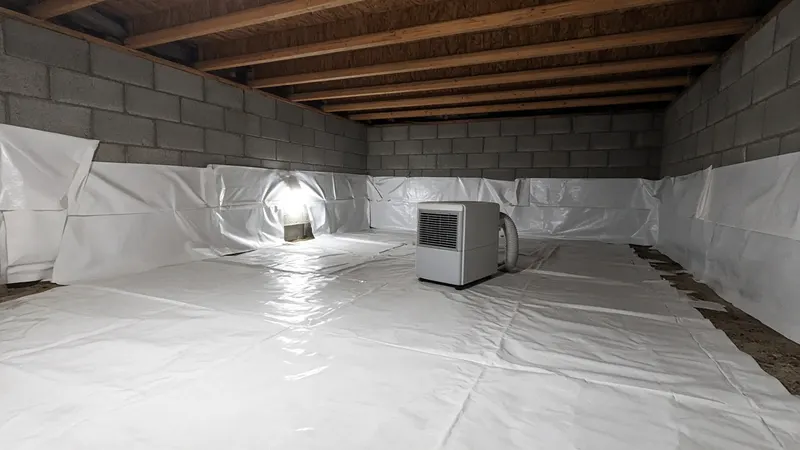
If your Nashville house sits on a crawl space, there is a good chance it has had mold at some point. Long, humid summers, clay soil and older vapor barriers make crawl spaces one of the most common mold calls in Middle Tennessee.
Why crawl spaces get so damp
The ground is wet. Middle Tennessee's clay soils hold water, and the dirt floor of a crawl space releases moisture into the air constantly. Without a vapor barrier covering it, that moisture rises into the space.
Summer air is humid. Outdoor air in July and August is warm and wet. When it flows through foundation vents into a cooler crawl space, its relative humidity rises, and water can condense on joists, ducts and pipes.
Water runs toward the house. Gutters that overflow, downspouts that dump next to the foundation, and yards that slope toward the house all push water under the home.
Ducts sweat. Air conditioning ducts carrying cold air through a humid crawl space can drip condensation, wetting insulation and wood below.
Signs your crawl space has a problem
- A musty smell inside the house, often stronger in summer or when the HVAC runs.
- Floors that feel soft, bouncy or cold.
- Sagging or fallen insulation between joists.
- Visible white, gray, green or black growth on joists and subfloor.
- Standing water or wet soil under the house.
- Rusty nails, ducts or metal straps.
What fixes it
- Fix the water. Gutters, downspout extensions and grading come first.
- Cover the ground. A heavy plastic vapor barrier over the dirt floor, overlapped and sealed, cuts moisture from the soil.
- Control the air. Depending on the house, that might mean sealing vents and adding a dehumidifier, or conditioning the space.
- Clean the wood. Mold on joists and subfloor is cleaned, often with HEPA vacuuming and scrubbing or sanding; badly damaged wood may need repair.
- Deal with insulation. Wet or moldy fiberglass batts are removed; some crawl spaces are better insulated at the walls.
See crawl space mold removal for what the process involves.
Encapsulation: what it is and is not
"Encapsulation" usually means a thick vapor barrier covering the floor and running up the foundation walls, sealed vents, and a dehumidifier. It can work well in Nashville's climate. But it is not a substitute for fixing drainage, and quotes vary widely. Ask what problem each part solves, and what the humidity target is.
Older Nashville neighborhoods
Crawl spaces are common in older neighborhoods like East Nashville, Inglewood, Madison and Sylvan Park, where many homes date from the early and mid 1900s. Many have thin or torn vapor barriers, old ductwork, and additions on different foundations. See our East Nashville and Madison pages for local details.
The connection to the rest of the house
Air from a crawl space moves up into the living space through gaps around pipes, wires and ducts. A moldy crawl space can mean musty air upstairs, and leaky return ducts in the crawl space can pull that air directly into the HVAC system. If your house smells musty when the AC runs, read musty smells during AC season too.
Do you need testing?
Usually not. If you can see growth or smell mustiness, the fix is moisture control and cleanup. See do you need mold testing.
Helpful sources
The EPA's guide to mold and moisture covers the basics of moisture control. The Tennessee Department of Health recommends keeping indoor humidity between 30 and 50 percent.
If your crawl space smells or looks like it has mold, call (626) 515-6097 to be connected with a local company that handles crawl spaces. Also see basement mold removal if your home has a lower level.
Frequently asked questions
Should Nashville crawl space vents be open or closed?
Traditional thinking said open vents dry crawl spaces. In humid climates like Middle Tennessee, summer air coming through vents is often wetter than the crawl space can handle, and it condenses on cooler surfaces. Many crawl spaces do better sealed, with a full vapor barrier and humidity control. The right answer depends on the house; ask an inspector.
What humidity should a crawl space be?
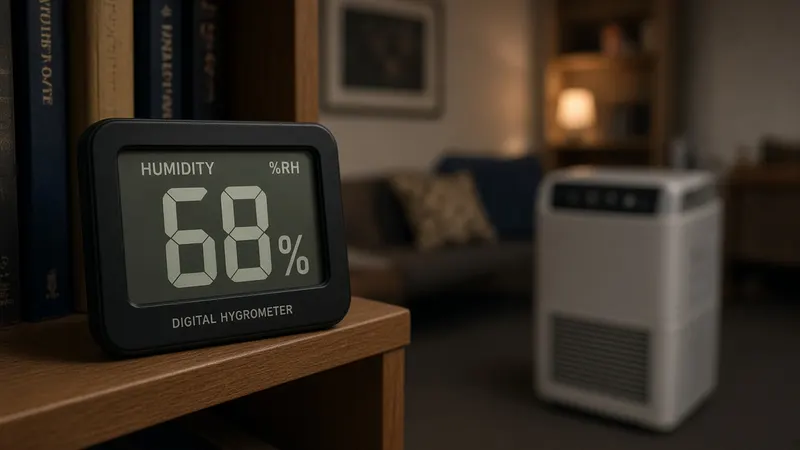
Keeping crawl space relative humidity below about 60 percent limits mold growth, since Metro Public Health notes mold can grow above that level. Many contractors aim for 50 to 55 percent. A remote hygrometer lets you check without crawling under the house.