
Not every mold problem needs a professional. A little mildew on a bathroom ceiling or a spot on a window sill is a normal household cleaning job. But some situations make DIY risky, expensive, or both. Here is how to tell the difference.
The 10-square-foot guideline
The EPA's guidance suggests homeowners can usually handle mold covering less than about 10 square feet, roughly a 3-foot by 3-foot patch, as long as it is on a surface that can be cleaned and there is no hidden problem behind it. See the EPA's mold cleanup guide.
Good DIY candidates
- Mildew on shower grout, caulk or tile.
- Small spots on a painted bathroom ceiling from steam.
- Condensation mold on window frames and sills.
- A small patch on a hard surface after a minor spill that was dried quickly.
When to call a professional
- Larger than about 10 square feet, or several patches that add up.
- Inside walls, ceilings or floors, or anywhere you would need to cut into drywall.
- In HVAC systems or ducts, where disturbing it can spread spores through the house.
- After sewage or floodwater, which carry contaminants.
- In attics or crawl spaces, which are hard and sometimes unsafe to work in.
- Recurring mold that keeps coming back, a sign of an unfixed moisture source.
- Anyone in the home has asthma, allergies, lung disease or a weakened immune system.
- A musty smell with no visible source.
How to clean small areas safely
- Fix the moisture first, or the mold will return.
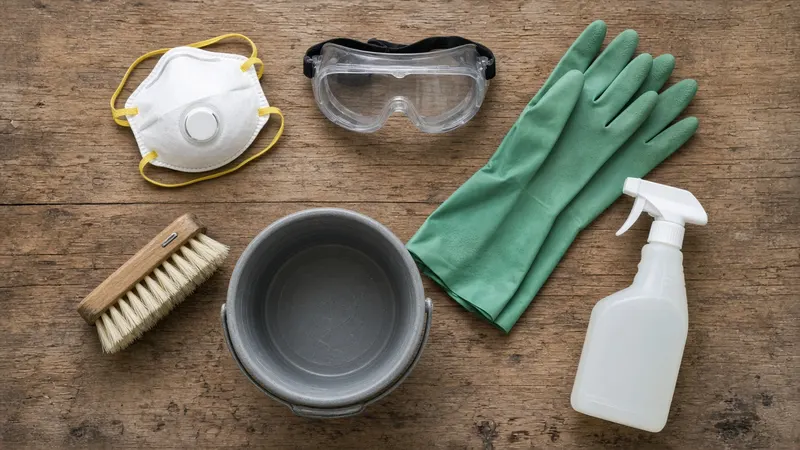
- Wear protection: an N95 respirator, goggles without vent holes, and long rubber or nitrile gloves.
- Keep it contained: close the door, and do not run a fan that blows spores around the house.
- Scrub hard surfaces with detergent and water. Do not dry-brush or sand moldy material, which spreads spores.
- Dry completely within 24 to 48 hours.
- Bag and discard moldy porous items, like ceiling tiles, carpet pad or cardboard, that cannot be cleaned.
Things that do not work
- Painting over mold. It shows through and keeps growing.
- Bleach on drywall or wood. The water in bleach can soak in and feed growth below the surface.
- Fogging or ozone machines. The EPA says ozone at levels safe for people does little to remove indoor contaminants, and high levels harm lungs.
- Ignoring the source. Mold is a moisture problem first.
What professionals do differently
A remediation company contains the work area with plastic sheeting and negative air pressure, uses HEPA vacuums and air scrubbers, removes damaged porous materials, cleans framing, and confirms the area is dry. They should also find and explain the moisture source. See mold remediation and bathroom mold removal.
The Nashville factor
Middle Tennessee's humidity means a DIY cleanup in a basement, crawl space or bathroom without good ventilation may only buy you a few weeks. Keep indoor humidity between 30 and 50 percent, run bath fans, and use a dehumidifier in damp areas. See crawl space mold and Nashville humidity.
Not sure what you have?
If you are not sure how large the problem is or where it is coming from, an inspection can tell you. Read do you need mold testing first. Then, if you want help, call (626) 515-6097 to be connected with a local mold company.
A realistic example
A Nashville homeowner notices dark spots on the ceiling above the shower, about the size of a dinner plate. The bath fan is weak. Cleaning the spots with detergent, letting the ceiling dry, and replacing the fan with one that vents outside is a reasonable weekend fix. Now imagine the same spots, but the ceiling feels soft and there is a bathroom directly above. That points to a leak, possibly inside the ceiling, and it is time to call someone.
Renters
If you rent, report mold to your landlord in writing before cleaning anything more than small surface spots. See mold in your Nashville rental.
Frequently asked questions
What should I clean mold with?
For hard, non-porous surfaces, the Tennessee Department of Health and EPA suggest detergent or soap and water, then thorough drying. Bleach is usually not necessary for routine cleanup and does not penetrate porous materials. Never mix bleach with ammonia or other cleaners.
Can I just spray mold with a mold killer?
Spraying without removing the growth leaves dead mold behind, which can still cause allergic reactions, and it does nothing about the moisture that caused it. Remove the growth and fix the moisture.