
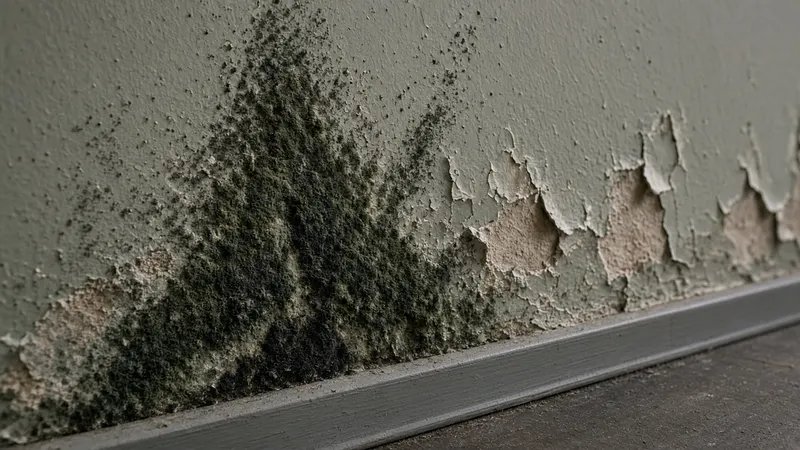
"Black mold" is one of the scariest phrases a homeowner can hear. Ads use it to sell urgency, and online stories make it sound like a death sentence. The reality is less dramatic, though mold of any color still needs to go.
What people mean by black mold
When people say black mold, they usually mean Stachybotrys chartarum, a greenish-black mold that grows on materials with lots of cellulose, like drywall paper, ceiling tiles and wood, that stay wet for a long time. It needs constant moisture, so it usually signals a long-running leak or flooding.
But many common molds are dark: Cladosporium, Alternaria, Aspergillus species and others can all look black or dark green. The mildew on your shower grout is dark too. You cannot identify a mold by color.
Is "toxic mold" real?
Some molds produce chemicals called mycotoxins, and Stachybotrys is one of them. But the phrase "toxic mold" is misleading. Public health agencies, including the CDC, note that molds themselves are not toxic or poisonous; certain molds can produce toxins, and there are no reliable tests to link a specific mold to specific health effects in a given person.
What is well established is that mold exposure can cause stuffy nose, wheezing, eye and skin irritation, and asthma flare-ups, and can be more serious for people with weakened immune systems or chronic lung disease.
Why the species usually does not matter
The response to any indoor mold is the same:
- Find and fix the moisture.
- Remove or clean the growth.
- Dry the area completely.
That is why the Tennessee Department of Health generally does not recommend testing to identify the species. See do you need mold testing.
Where dark mold shows up in Middle Tennessee homes
- Behind and under sinks, toilets and tubs where slow leaks soak drywall and cabinets.
- In finished basements where groundwater wicks into drywall and carpet.
- On attic sheathing where bath fans vent into the attic or ventilation is poor.
- On crawl space joists in humid summers.
- Behind furniture on exterior walls where condensation forms in winter.
Can you clean black mold yourself?
The same rules apply as for any mold. The EPA suggests homeowners can usually handle areas smaller than about 10 square feet on hard surfaces with detergent and water, gloves, goggles and an N95 respirator. Larger areas, mold inside walls or HVAC systems, or growth after sewage or flood water call for a professional. Moldy drywall usually needs to be cut out, not cleaned. See DIY cleanup vs. hiring a professional.
Red flags in black mold marketing
Be cautious of anyone who:
- Tells you a mold is toxic based on color alone.
- Pushes an expensive test before even looking for the moisture source.
- Offers to fog or spray the house without removing damaged materials.
- Uses fear instead of a written scope.
The EPA notes that dead mold can still cause allergic reactions, so killing mold without removing it is not enough. Its mold cleanup guidance is a good reference.
What to do if you find it
Do not scrape or dry-brush it, which spreads spores. Close the door to the room if you can. Find and stop the water source if obvious. For larger areas, have it inspected. See black mold removal and water damage mold.
A note on health
If you or someone in your home has symptoms you think might relate to mold, talk with your doctor and mention the exposure. Infants, older adults, and people with asthma, allergies or immune problems may be more sensitive.
Calm and methodical beats scared
Black mold is a moisture problem with a dark color. Treat it seriously, deal with the water, remove the growth properly, and you solve the problem. For help finding a local company, call (626) 515-6097.
Frequently asked questions
Is black mold more dangerous than other mold?
The mold often called black mold, Stachybotrys chartarum, can produce mycotoxins, but public health agencies say there is no reliable test to link specific health effects to it, and all indoor mold growth should be treated the same way - removed, with the moisture fixed. Many molds that look black are not Stachybotrys at all.
Should I leave the house if I find black mold?
Most people do not need to leave. Keep the area closed off, avoid disturbing it, and fix the moisture. People with asthma, severe allergies, lung disease or weakened immune systems should limit exposure and talk with their doctor, especially during removal work.